



Mixed Lineage Kinase Inhibitor
- 1
- 2
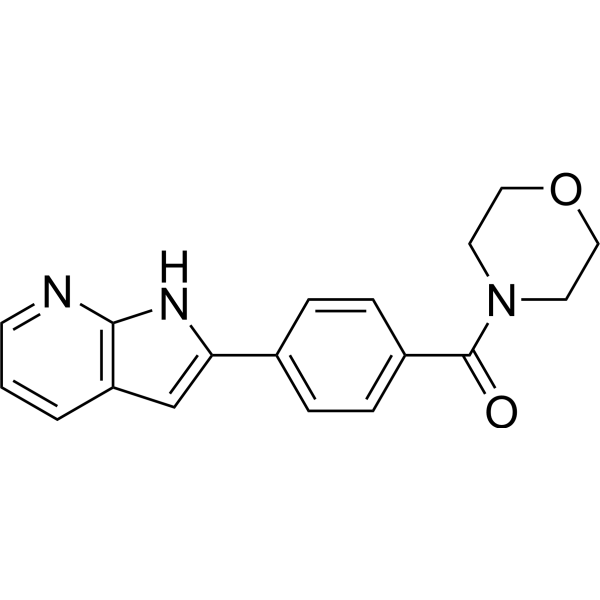
-
Necrosulfonamide-d4
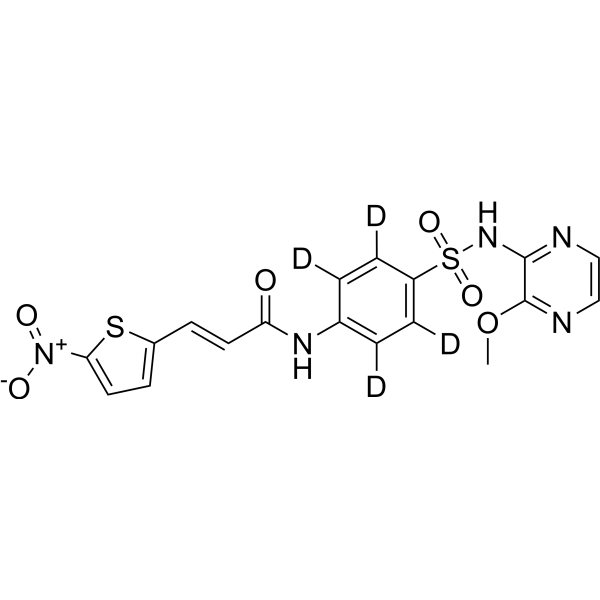 0 Images
Necrosulfonamide-d4 is the deuterium labeled Necrosulfonamide (HY-100573). Necrosulfonamide is a MLKL and Gasdermin D (GSDMD) inhibitor, capable of separately inhibiting necroptosis and pyroptosis of cells. Necrosulfonamide does not affect the activation of upstream signals, but specifically inhibits the downstream executor oligomerization step. Necrosulfonamide reduces the expression of the key kinases NLRP3 and caspase-1 involved in necroptosis and pyroptosis, activate the Nrf2 pathway and the downstream antioxidant enzymes, and also downregulates a variety of inflammatory factors. Necrosulfonamide plays significant roles in various diseases such as neurodegenerative diseases (such as Parkinson’s disease), tissue damage and ischemia-reperfusion injury, inflammatory bowel disease, osteoarthritis and fracture repair, and hair loss by regulating two important programmed necrosis pathways.
-
MLK-IN-2
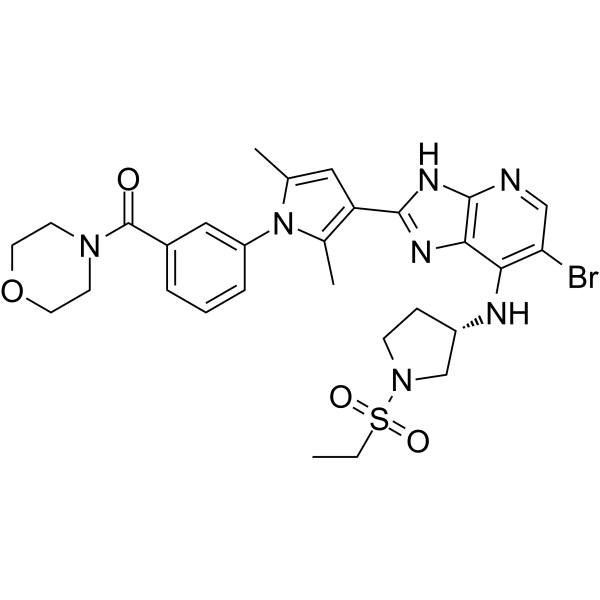 0 Images
MLK-IN-2 (Compound 9a) is a Mixed Lineage Kinase 3 (MLK3) inhibitor containing 3H-imidazole [4,5-b] pyridine structure. IC50 value is 6 nM. MLK-IN-2 can be used to study cancer and neurodegenerative diseases.
-
Zharp1-163
 0 ImagesCat. No.: HY-178163
Zharp1-163 is a dual inhibitor of ferroptosis and necroptosis. Zharp1-163 effectively blocks ferroptosis by reducing reactive oxygen species (ROS) levels and inhibits necroptosis by potently and selectively targeting RIPK1 kinase activity (KD = 240 nM; IC50 = 406.1 nM). Zharp1-163 inhibits the cellular activation of RIPK1, RIPK3 and MLKL in response to necroptotic stimulation. Zharp1-163 markedly attenuates TNF-α (HY-P1875)-induced systemic inflammatory syndrome, including the prevention of TNF-α-induced mortality and hypothermia in mice. Zharp1-163 significantly alleviates acute kidney injury associated with both necroptosis and ferroptosis in models induced by Cisplatin (HY-17394) and ischemia-reperfusion. Zharp1-163 can be used for the study of diseases associated with cell death pathways, such as kidney disease.
-
RIPK1-IN-34
 0 ImagesCat. No.: HY-178464CAS No.: 3065634-19-4
RIPK1-IN-34 is a selective, brain-penetrant RIPK1 inhibitor (IC50 = 126.70 nM) with almost no inhibitory effect on RIPK3 (IC50 > 10, 000 nM). RIPK1-IN-34 offers substantial neuroprotection by inhibiting the phosphorylation of RIPK1, RIPK3, and mixed lineage kinase domain-like pseudokinase (MLKL) within the necroptosis pathway. RIPK1-IN-34 shows the neuroprotective effect in a rat middle cerebral artery occlusion (MCAO) model. RIPK1-IN-34 can be used for the study of anti-acute ischemic stroke (AIS).
-
RIPK1-IN-38
 0 ImagesCat. No.: HY-179680CAS No.: 3092834-30-2
RIPK1-IN-38 is an orally active RIPK1 inhibitor with an IC50 value of 27 nM. RIPK1-IN-38 can inhibit the phosphorylation of RIPK1 and its downstream signaling molecules RIPK3 and MLKL. RIPK1-IN-38 exhibits anti-necroptotic activity. RIPK1-IN-38 has excellent anti-inflammatory efficacy in both the SIRS model and GVHD model. RIPK1-IN-38 can be used for the research of inflammatory and immune-related diseases.
-
MLK3-IN-1
 0 ImagesCat. No.: HY-170486CAS No.: 3104123-06-7
MLK3-IN-1 (Compound 37) is a selective inhibitor for mixed-lineage protein kinase 3 (MLK3) with an IC50 <1 nM. MLK3-IN-1 inhibits FAK with an IC50 of 15.5 μM. MLK3-IN-1 exhibits good metabolic stability in mouse and human liver microsomes.
-
SZM-1209
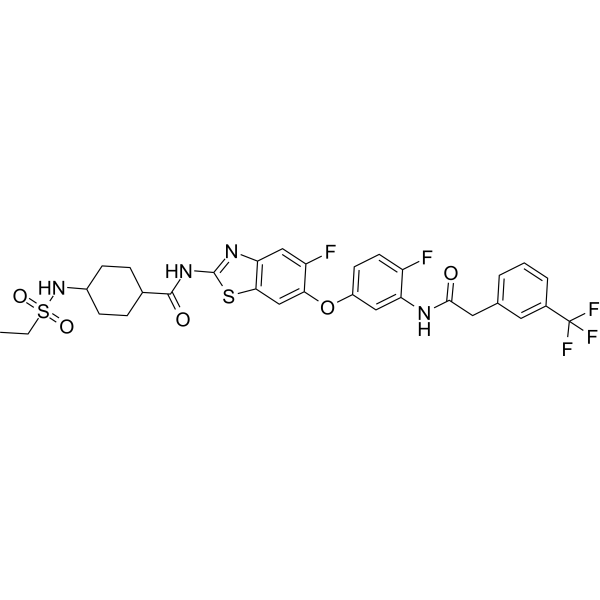 0 ImagesCat. No.: HY-149052CAS No.: 2919801-86-6
SZM-1209 is an orally active, potent and specific RIPK1 inhibitor, with a Kd of 85 nM. SZM-1209 exhibits high anti-necroptotic activity (EC50=22.4 ± 8.1 nM). SZM-1209 shows anti-SIRS (systemic inflammatory response syndrome), and anti-ALI (acute lung injury) effects.
-
MLKL-IN-3
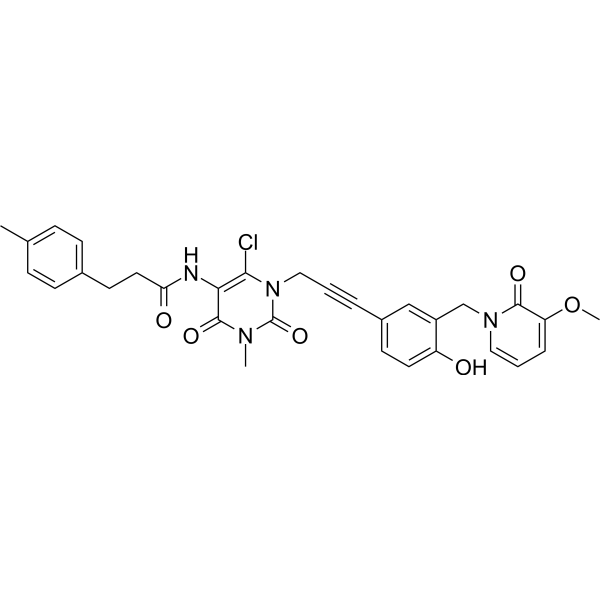 0 ImagesCat. No.: HY-151541CAS No.: 3031406-27-3
MLKL-IN-3 (compound 66) is a potent MLKL (Mixed lineage kinase domain-like protein) inhibitor. MLKL-IN-3 inhibits necroptosis in HT-29 cells and acts downstream of MLKL phosphorylation, with EC50 of 31 nM. MLKL-IN-3 is a click chemistry reagent, it contains an Alkyne group and can undergo copper-catalyzed azide-alkyne cycloaddition (CuAAc) with molecules containing Azide groups.
-
RIPK1-IN-42
 0 ImagesCat. No.: HY-184686
RIPK1-IN-42 is an orally active RIPK1 inhibitor with a Kd of 21 nM. RIPK1-IN-42 inhibits the phosphorylation of RIPK1, suppresses the phosphorylation of downstream RIPK3 and MLKL, blocks necrosome formation, and inhibits necroptosis. RIPK1-IN-42 alleviates hypothermia, suppresses the elevation of pro-inflammatory cytokine levels, and reduces organ damage. RIPK1-IN-42 can be used for the research of systemic inflammatory response syndrome.
-
WJH-C19
 0 ImagesCat. No.: HY-181596Purity: 98.65%
WJH-C19 is an orally active RIPK1 inhibitor with an IC50 of 5.7 nM. WJH-C19 inhibits the RIPK1/RIPK3/MLKL signaling axis, blocks RIPK1 phosphorylation, suppresses the phosphorylation of downstream RIPK3 and MLKL, disrupts necrosome formation, and exhibits protective effects against necroptosis (Apoptosis) in multiple cell lines. WJH-C19 ameliorates symptoms of inflammatory bowel disease in a mouse colitis model by regulating the necroptosis pathway. WJH-C19 alleviates inflammation and bone destruction in a mouse model of rheumatoid arthritis. WJH-C19 is applicable to research related to inflammatory bowel disease and rheumatoid arthritis.
-
MLKL-IN-5
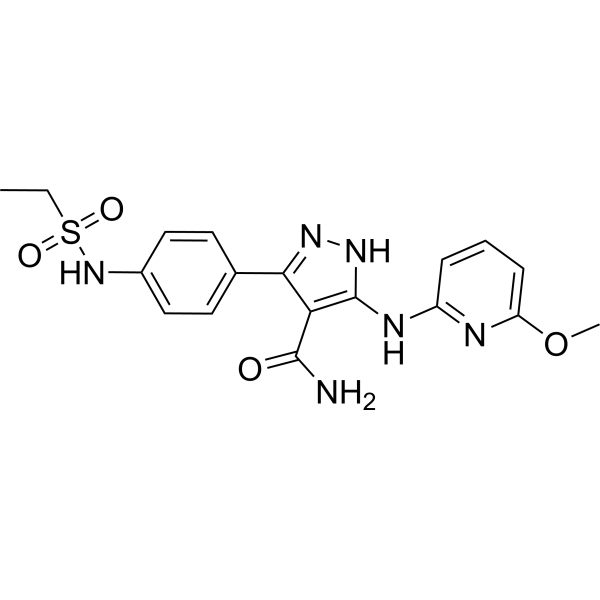 0 ImagesCat. No.: HY-148767CAS No.: 2755872-58-1
MLKL-IN-5 is a mixed lineage kinase domain-like protein (MLKL) inhibitor with a KD of < 10 nM. MLKL-IN-5 exhibits selectivity for RIP3 and RIP1, with KD values of 1-30 μM and > 30 μM, respectively. MLKL-IN-5 mediates necroptosis.
-
MLKL-IN-7
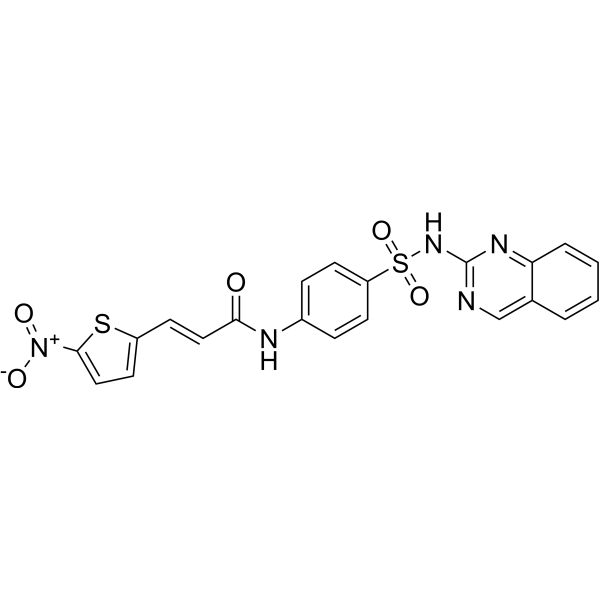 0 ImagesCat. No.: HY-161361CAS No.: 3034839-17-0
MLKL-IN-7 (compound 9) is a MLKL inhibitor, and shows anti-necroptosis activity in HT-29 cells with the IC50 of 148.4 nM.
-
MLKL-IN-1
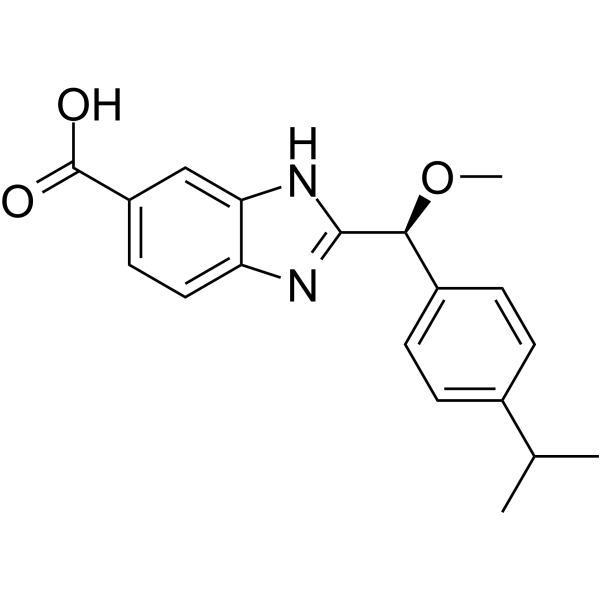 0 ImagesCat. No.: HY-139878CAS No.: 2837019-30-2
MLKL-IN-1 is a covalent MLKL inhibitor with a KD of 50 μM.
-
MLK-IN-3
 0 ImagesCat. No.: HY-180338CAS No.: 105788-15-6
MLK-IN-3 (Compound 30) is a MLK inhibitor with an IC50 of less than 5 μM. MLK-IN-3 can be used in the research of neurological diseases.
-
MLKL-IN-4
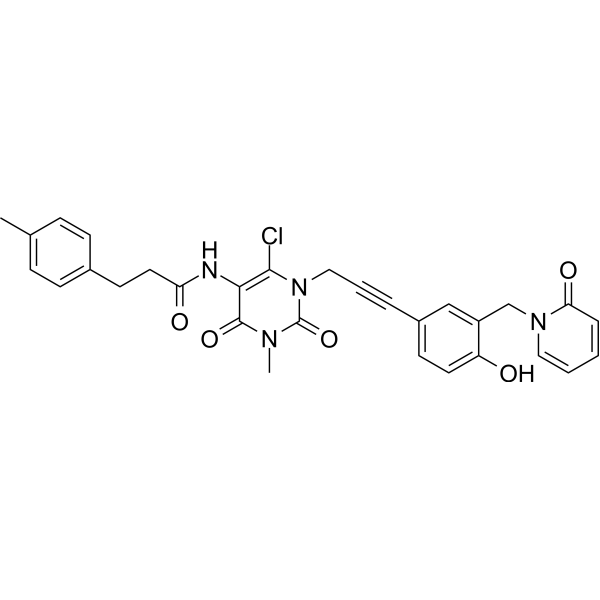 0 ImagesCat. No.: HY-151542CAS No.: 3031406-17-1
MLKL-IN-4 (compound 56) is a potent MLKL (Mixed lineage kinase domain-like protein) inhibitor. MLKL-IN-4 inhibits necroptosis in HT-29 cells and acts downstream of MLKL phosphorylation, with EC50 of 82 nM. MLKL-IN-4 is a click chemistry reagent, it contains an Alkyne group and can undergo copper-catalyzed azide-alkyne cycloaddition (CuAAc) with molecules containing Azide groups.
-
Ligustroflavone (Standard)
 0 ImagesCat. No.: HY-N0546RCAS No.: 260413-62-5Synonyms: Nuezhenoside (Standard)
Ligustroflavone (Standard) is the analytical standard of Ligustroflavone (HY-N0546). This product is intended for research and analytical applications. Ligustroflavone is an orally active flavonoid compound. Ligustroflavone can be extracted from Ligustrum lucidum. Ligustroflavone antagonizes the calcium-sensing receptor (CaSR), inhibits the RIPK1/RIPK3/MLKL pathway, and downregulates TGF-β/Smad signaling. Ligustroflavone regulates calcium metabolism, protects bone tissue, reduces cerebral ischemic injury, and inhibits liver fibrosis. Ligustroflavone can be used in the study of diabetic osteoporosis, ischemic stroke, and liver fibrosis.
-
Necrosulfonamide (Standard)
 0 ImagesCat. No.: HY-100573RCAS No.: 1360614-48-7
Necrosulfonamide (Standard) is the analytical standard of Necrosulfonamide (HY-100573). This product is intended for research and analytical applications. Necrosulfonamide is a MLKL and Gasdermin D (GSDMD) inhibitor, capable of separately inhibiting necroptosis and pyroptosis of cells. Necrosulfonamide does not affect the activation of upstream signals, but specifically inhibits the downstream executor oligomerization step. Necrosulfonamide reduces the expression of the key kinases NLRP3 and caspase-1 involved in necroptosis and pyroptosis, activate the Nrf2 pathway and the downstream antioxidant enzymes, and also downregulates a variety of inflammatory factors. Necrosulfonamide plays significant roles in various diseases such as neurodegenerative diseases (such as Parkinson’s disease), tissue damage and ischemia-reperfusion injury, inflammatory bowel disease, osteoarthritis and fracture repair, and hair loss by regulating two important programmed necrosis pathways.
-
TC13172 (Standard)
 0 ImagesCat. No.: HY-101524RCAS No.: 2093393-05-4
-
MLK-IN-1 (Standard)
 0 ImagesCat. No.: HY-111351RCAS No.: 1627729-62-7
- 1
- 2



